The Future of Digital Interaction: The AI Revolution
Disappearing interfaces, AI as the response channel, and a new role for the people who build technology.
English translation of an article originally published in Spanish on LinkedIn on March 14, 2025. Leer el original en español.
In this article
Over the next 5 to 10 years, maybe more, maybe less, the technology landscape will undergo a radical transformation that will completely change the way we interact with devices and digital platforms. What has dominated the tech industry for the past few decades (user interfaces (UI), user experience (UX), and traditional programming languages) will be replaced by something far more sophisticated, fluid, and intuitive. Artificial intelligence (AI) will be at the center of this transformation, and it will change not only how we interact with technology, but also how digital services are built and delivered.
The disappearance of traditional interfaces
Today, interacting with most digital platforms depends on visual interfaces, with buttons, menus, and screens that give us access to different features. Over the years, UX/UI designers have worked tirelessly to create pleasant, efficient experiences for users. However, this approach, built around interacting with physical screens, is starting to become obsolete.
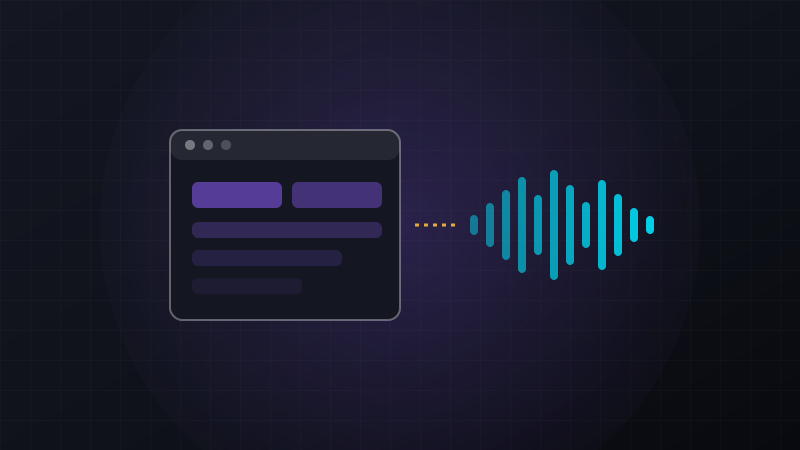
In the future, the need for graphical interfaces could fade as AI and natural language processing (NLP) technologies become far more advanced. Users will not need to navigate menus or click buttons. Instead, they will simply interact with technology through voice, writing, or even other senses, such as touch or smell, once technological advances allow it. Voice in particular will be the most prominent mode of interaction, letting users communicate with technology completely naturally, as if they were talking to another person.
AI as the new response channel
The key to this future lies in how AI will transform the way we get results. We will no longer need an interface or a traditional piece of software to return a structured answer. AI will be able to interpret our requests and directly return the expected result, without a mediation process through visual interfaces or traditional programming.
For example, if a user needs to perform a task that would traditionally require a complex application, the AI will be able to understand the request and deliver the result in the right format. If a report is needed, the AI will generate it immediately. If a data analysis is needed, the AI will provide the expected result without the user having to navigate multiple screens or manage the software's interface. Instead of interacting with a system through buttons and menus, people will be able to get exactly what they want simply by stating clearly what they need.
Pick one of the tasks the article mentions and compare today's path with the one this future proposes.
Today: through the interface
- Open the application
- Navigate menus and screens
- Configure options with buttons
- Generate and export the report
Tomorrow: AI as the response channel
- State clearly which report you need, by voice or in writing
- The AI generates it immediately, in the right format
Today: through the interface
- Open the analytics software
- Import the data
- Navigate multiple screens and manage the interface
- Interpret the structured output
Tomorrow: AI as the response channel
- Ask for the analysis naturally
- The AI directly returns the expected result
The end of traditional programming
As AI advances, the need to write code the traditional way or to build complex interfaces will become obsolete. Instead of interacting with a development environment, programmers will no longer have to write lines of code to produce a product or service. In fact, the development process will be radically different: a conventional user interface or programming system will no longer be required, because the AI itself will directly provide the results that interface would have produced.
This means that, instead of working on building and coding applications, programmers and designers will focus on precisely defining the requests and goals they want to achieve. Technology professionals will not need knowledge of specific programming languages or of building visual interfaces; their job will be closer to supervising and coordinating the AI to obtain the right results. The role of the traditional programmer will therefore shift from creator of interfaces and applications to facilitator who guides the process of generating results through AI.
Traditional programmer
- Creator of interfaces and applications
- Writes lines of code
- Works inside a development environment
AI facilitator
- Precisely defines requests and goals
- Supervises and coordinates the AI
- Guides the process of generating results
AI as an ethical and cognitive ally
The digital transformation driven by artificial intelligence will not only change how we interact with technology; it will also demand an ethical and cognitive restructuring of society. As AI takes on more programming and development functions, it will be crucial to ensure that the decisions these machines make are responsible, transparent, and aligned with human values.
AI ethics will be a field of growing importance, and the professionals of the future will need to be experts not only in technology, but also in philosophy, psychology, and the social sciences, to make sure machines understand and respect ethical and moral principles. This will open new opportunities and roles for professionals who want to collaborate with AI to build a future in which technology does not replace human beings, but empowers them.