
The Hacking AI Decade Is Coming
Why agentic AI creates a new attack surface, what prompt injection and confused deputy risks mean, and why history is repeating itself.
Essays on AI engineering, software architecture, security, and product management, originally published on LinkedIn. Every article is available in English and Spanish, each one includes an interactive explainer of its central idea.
Why agentic AI creates a new attack surface, what prompt injection and confused deputy risks mean, and why history is repeating itself.
A thought experiment with no external stimuli reveals the key difference between humans and AI: where action and intention come from.
Why integration is not enough for tools like Jira and Confluence, how friction kills living documentation, and why the API is the escape hatch.
Why using AI well is about thinking, not prompting, and how Markdown (context, objective, constraints, criteria) compiles human intention.
Why AI costs and context limits are usually an architecture problem, and why bounded context and modular design matter more than ever.

An elite developer is not defined by a stack: no-waiting mentality, cross-layer execution, owning your environment, and respecting mastery.

Why "AI won't replace programmers" is a comfortable lie, why context architecture is the new discipline, and why IDEs must pivot.
Why detecting AI content is bound to fail, and how a verification model based on hardware and traceability can protect the truth.
How AI could replace traditional interfaces and conventional programming, and the new role technology professionals would play.

Four product management lessons inspired by the Uncertainty Principle: balancing strategy and execution, and embracing uncertainty.

What an AI Controller does, their responsibilities, the skills the role requires, and why it matters for ethical, reliable AI.
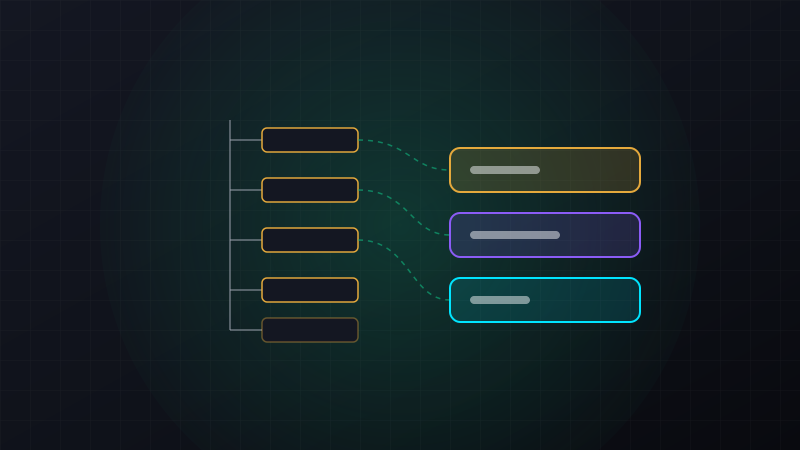
Why a Flutter project's folder structure should mirror its architecture (BLoC, MVVM, Redux), and four steps to keep the two aligned.